

EPJ Plus Highlight - Image processing brings new clarity to RTe3’s electronic structure
- Details
- Published on 05 March 2026
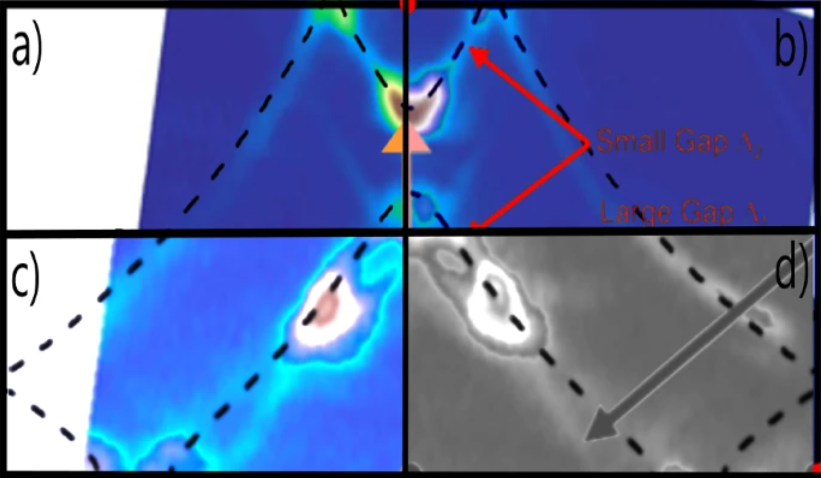
By applying image segmentation to ARPES data, researchers reconcile Fermi surface measurements with magnetic quantum oscillations and precisely determine the size of tiny electron pockets in rare-earth tritellurides.
Rare-earth tritellurides (RTe₃) are a class of two-dimensional quantum materials known for their diverse electronic properties. One of the most powerful tools for studying them is angle-resolved photoemission spectroscopy (ARPES), which probes the allowed energies and momenta of electrons in solids. Despite its strengths, conventional ARPES methods are not well suited to producing fully accurate two-dimensional momentum maps, limiting researchers’ view of the complex electronic landscape these materials host.
In new research published in EPJ Plus, a team led by Alexander Morocho and supervised by Prof. Pavel D. Grigoriev at the National University of Science and Technology (MISiS), Moscow, demonstrates how this limitation can be overcome through careful image processing of ARPES data combined with comparisons to magnetic quantum oscillations. Their results could help physicists better understand the origins of exotic quantum effects in RTe₃ compounds, possibly paving the way for new applications.
EPJ Plus Focus Point: Nuclear microprobe technology and applications
- Details
- Published on 05 March 2026
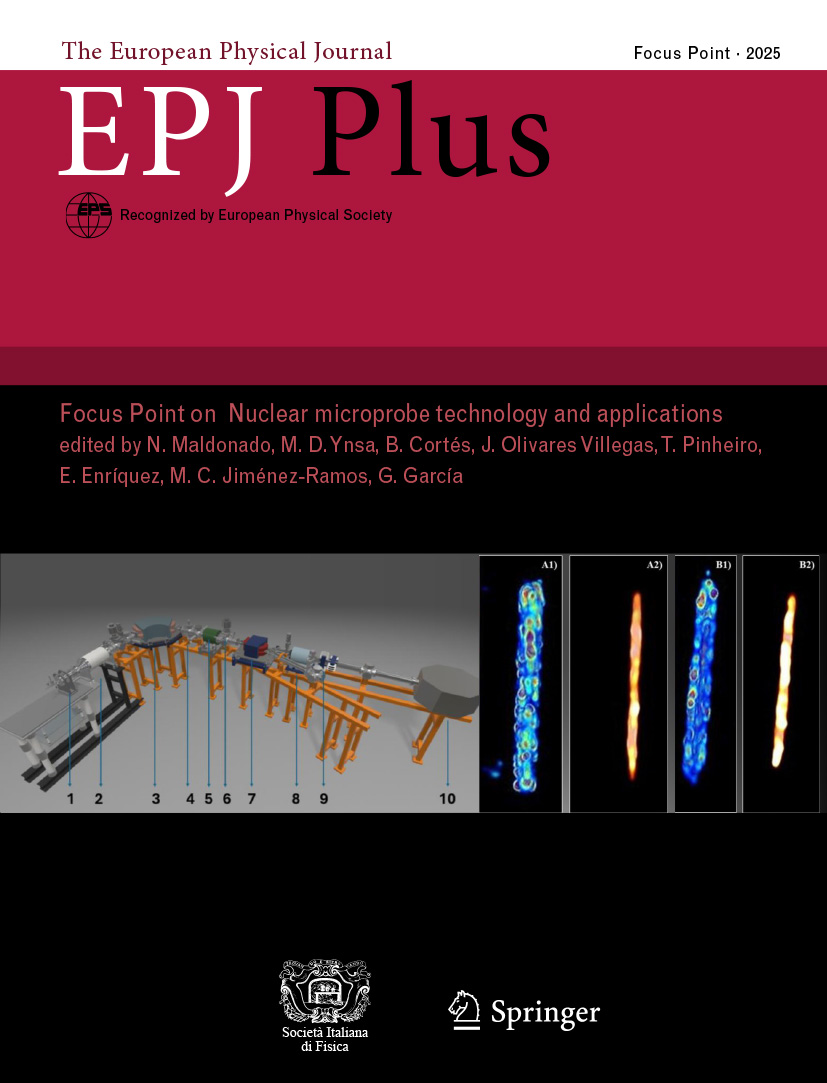
Guest Editors: Noelia Maldonado, María Dolores Ynsa, Belén Cortés, José Olivares Villegas, Teresa Pinheiro, Esther Enríquez, M. Carmen Jiménez-Ramos, Gastón García
This Focus Point issue includes 19 papers showcasing the diversity and innovation within the nuclear microprobe community, ranging from microelectronic radiation testing and ion-beam-induced charge microscopy to advances in microbeam systems, quantum device fabrication, and biomedical applications. The contributions originate from the 19th International Conference on Nuclear Microprobe Technology and Applications (ICNMTA2024), which was held at the Auditorium of the Faculty of Medicine, Universidad Autónoma de Madrid in June 2024.
All articles are available here and are freely accessible until 23 April 2026. For further information, read the Editorial.
EPJ Plus Focus Point: CBRNE events: prevention, mitigation, consequences and recovery
- Details
- Published on 04 March 2026
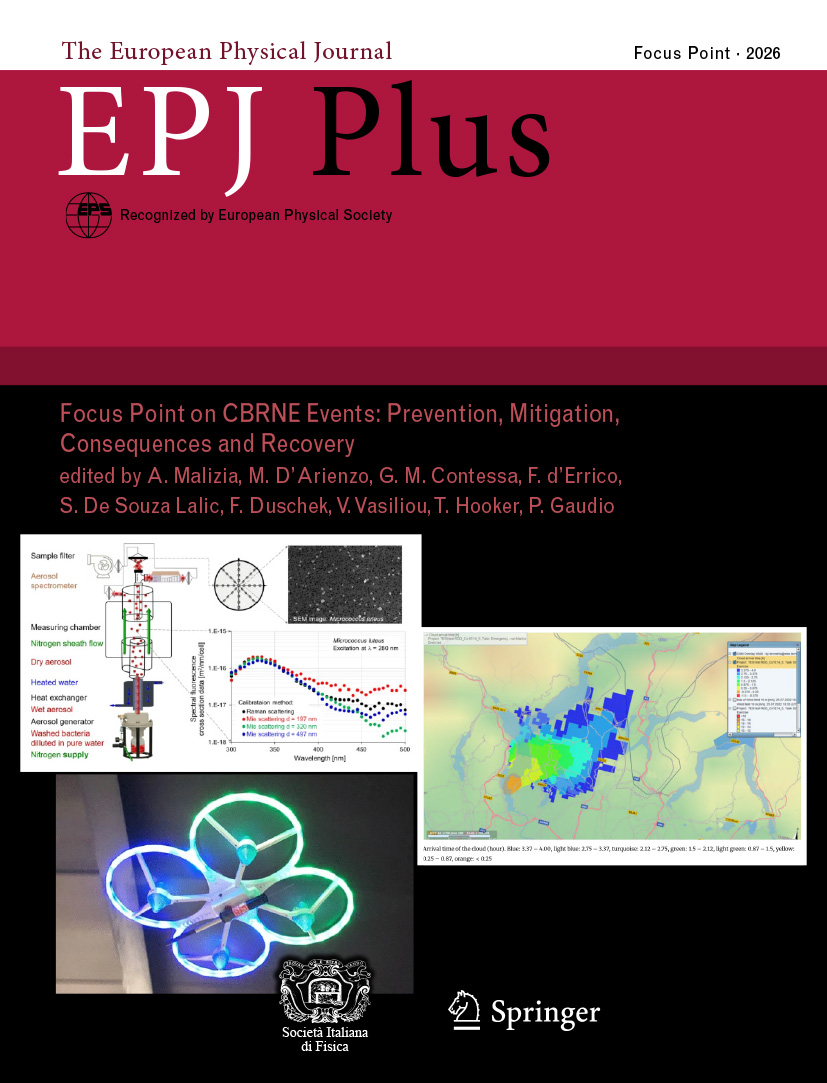
Guest Editors: Andrea Malizia, Marco D’Arienzo, Gian Marco Contessa, Francesco d’Errico, Susana de Souza Lalic, Frank Duschek, Vasilis Vasiliou, Antony M. Hooker, Pasquale Gaudio
CBRNE (Chemical, Biological, Radiological, Nuclear and Explosive) events remain among the most complex and disruptive threats facing contemporary societies, demanding integrated scientific and technological responses across multiple domains. This Focus Point of The European Physical Journal Plus brings together a curated collection of contributions that address the entire CBRNE risk-management cycle, from prevention and early detection to impact assessment, emergency response, and recovery. The articles highlight advances in radiation and nuclear detection, chemical and biological sensing, aerosol science, forensic analysis, and high-fidelity modelling, alongside innovative approaches in decontamination, responder protection, digital governance, and critical-infrastructure resilience. Particular attention is given to field-deployable technologies, UAV-based sensing platforms, decision-support tools, and scenario-based modelling frameworks that bridge research and operational practice. By integrating physics, engineering, biosciences, and digital technologies, this Focus Point provides a multidisciplinary and operationally relevant perspective on CBRNE preparedness and resilience. It offers researchers, practitioners, and decision-makers scientifically robust insights and scalable solutions to address non-conventional threats in an increasingly interconnected world.
All articles are available here and are freely accessible until 23 April 2026. For further information, read the Editorial.
EPJ Plus Highlight - GEMINI: Suppressing seismic noise for future gravitational-wave detectors
- Details
- Published on 04 March 2026
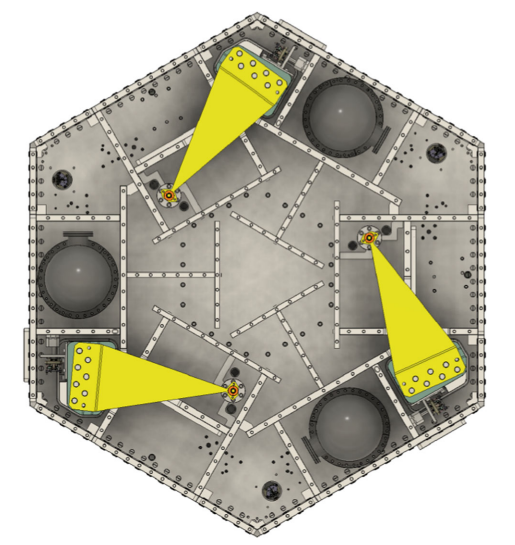
By refining seismic isolation and control strategies deep underground, GEMINI aims to unlock the low-frequency frontier of gravitational-wave astronomy
Since the first observation of gravitational waves in 2015, detectors including LIGO, Virgo, and KAGRA have analysed numerous ripples in the fabric of spacetime, pushing our understanding of astronomy and fundamental physics to new limits. However, the capabilities of these existing ground-based detectors have been constrained by seismic noise: ambient seismic vibrations in the Earth’s crust that overlap with the frequencies of gravitational waves below around 10 Hz. So far, this has made it difficult for researchers to distinguish this noise from genuine low-frequency gravitational-wave signals.
Through a new study published in EPJ Plus, a team led by Tomislav Andric at the Gran Sasso Science Institute explores the future potential of GEMINI: a cutting-edge underground testbed dedicated to seismic isolation and control technologies. Their study provides a valuable roadmap for planned next-generation detectors, including the Einstein Telescope and the Lunar Gravitational-Wave Antenna (LGWA) – possibly paving the way for a new wave of astronomical discoveries.
New EPJ Plus Section: Radiation Physics and CBRNe Science
- Details
- Published on 03 March 2026
EPJ Plus is proud to announce the launch of a new section “Radiation Physics and CBRNe Science” established to provide a unified scientific platform where radiation physics and CBRNe science are equally represented as complementary and interdependent domains.
Within this integrated framework, the section aims to host high-quality research that advances fundamental understanding, technological innovation, and operational preparedness across all chemical, biological, radiological, nuclear, and explosive (CBRNe) dimensions, with radiation physics standing alongside chemical, biological, and explosive sciences as a core component of integrated risk management. In this context, the section provides a dedicated platform for studies addressing radiation-related phenomena across the entire electromagnetic spectrum, ranging from routine exposures in medicine, industry, energy, and research to accidental or intentional releases of radiological and nuclear materials in complex emergency and security scenarios.
Beyond original research articles, the section also welcomes progress reports, roadmaps and white papers, technical documents, and protocols as well as tutorials and reviews. Contributions may also take the form of perspectives and position papers, case studies, and lessons-learned analyses or validation and intercomparison studies.
By establishing “Radiation Physics and CBRNe Science” as a new section, EPJ Plus affirms its commitment to interdisciplinary research that bridges physics, engineering, life sciences, and security domains while fostering a community of researchers and practitioners working at the frontier of non-conventional risk science.
For more details please read this Editorial written by the Managing Editors of this new section, Gian Marco Contessa (Italian National Institute of Health, Rome, Italy) and Andrea Malizia (Department of Biomedicine and Prevention, University of Rome Tor Vergata, Rome, Italy).
EPJ Plus Highlight - A roadmap for radiation protection in human space exploration
- Details
- Published on 10 February 2026
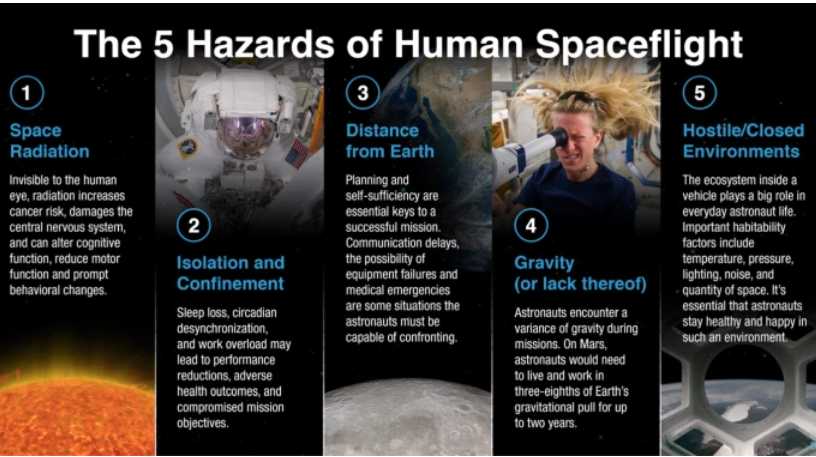
Comprehensive new review outlines the risks posed by space radiation, and the strategies needed to safeguard astronauts on long missions into outer space
Among the many challenges of human space exploration, radiation remains one of the most serious threats to astronaut health. Before the next extended interplanetary voyages, researchers must better understand both the risks posed by space radiation and how they can be mitigated.
In a comprehensive review published in EPJ Plus, a team led by Livio Narici at the University of Rome Tor Vergata examines the complex nature of the space radiation environment, its biological effects, and the latest strategies for risk assessment and mitigation. Drawing together results from lab studies, space missions, and analogue experiments, the team identify key knowledge gaps and propose a detailed roadmap for protecting human health during future missions to the Moon, Mars, and beyond.
EPJ Plus Highlight - Using protein microtubules for quantum computations
- Details
- Published on 20 January 2026
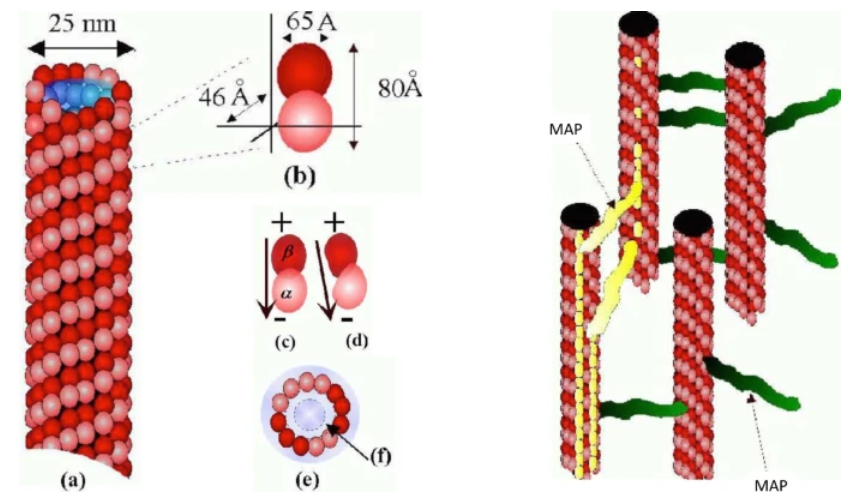
A new model shows how networks of protein-based microtubules could host entangled quantum states under normal biological conditions
For now, the possibility of using biological structures as a platform for quantum computing remains an open question. While existing quantum computers require tightly controlled conditions to preserve quantum coherence, researchers have begun exploring how quantum information could be stored and processed more naturally within complex biomolecular structures.
In new research published in EPJ Plus, Nick Mavromatos at the National Technical University of Athens), Andreas Mershin at RealNose.AI, and Dimitri Nanopoulos at Texas A&M University present a model in which entangled quantum states are hosted by networks of protein-based microtubules. If experimentally confirmed, this model could open entirely new avenues toward biological quantum computers, potentially more resilient to information loss than current technologies.
EPJ Plus Highlight - A better model for effective neutron capture therapy
- Details
- Published on 19 December 2025
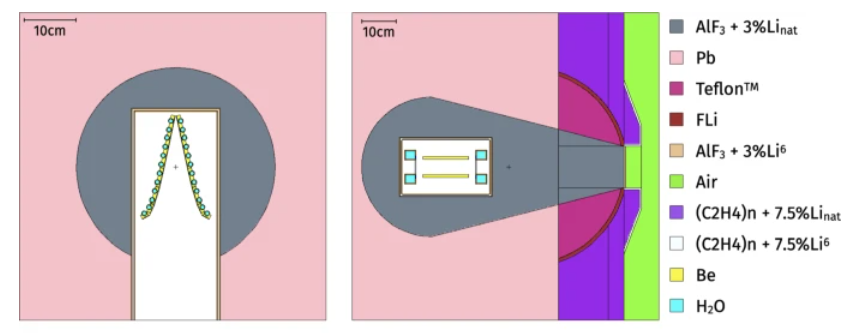
Accounting for multiple neutron production mechanisms, the model makes safe neutron-based cancer treatments easier to control
Boron Neutron Capture Therapy (BNCT) is an innovative technique for treating tumours that are non-operable, or resistant to more conventional treatments. To exploit BNCT’s potential at its best, a neutron beam with suitable energy and angular distributions is needed. Nowadays, proton accelerators coupled to lithium or beryllium targets are widely used as neutron sources, but so far, the yields of neutrons produced by the beryllium target, which is the safest and most controllable of the two, have proven difficult to calculate.
Through new research published in EPJ Plus, Alessandro Colombi and colleagues at Italy’s National Institute for Nuclear Physics have developed a new model for proton-BNCT, which can more accurately calculate the neutron beams produced when protons are fired into a thick beryllium-9 target. Their model could ultimately lead to more reliable techniques for treating malignant tumours.
EPJ Plus Focus Point Issue: Scientific Research in Cultural Heritage 2022
- Details
- Published on 12 December 2025
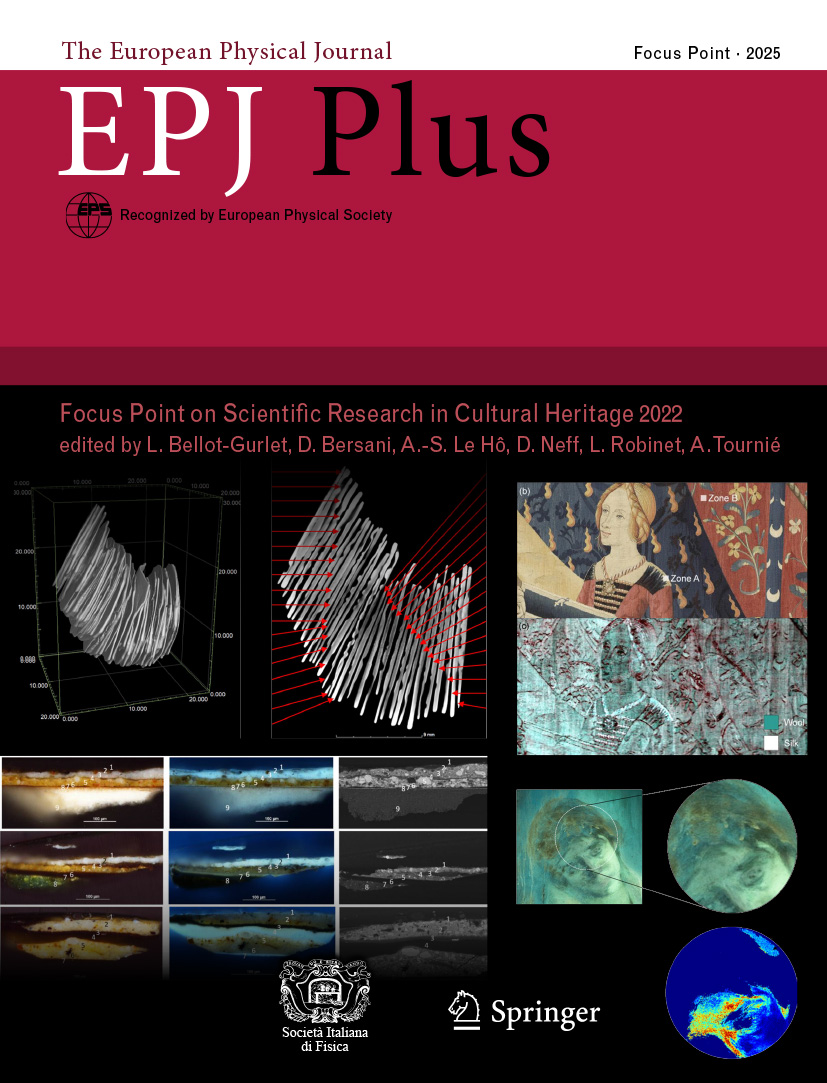
Guest Editors: Ludovic Bellot-Gurlet, Danilo Bersani, Anne-Solenn Le Hô, Delphine Neff, Laurianne Robinet, Aurélie Tournié
This EPJ Plus Focus Point on “Scientific Research in Cultural Heritage: articles from the 5th International Conference on Innovation in Art Research and Technology (inArt 2022)” brings together 33 papers from 47 oral presentations and 119 posters presented at the conference held in Paris from 28 June to 1 July 2022. These articles illustrate the wide range of topics covered at the conference, which fall within the scope of archaeometry or conservation science. The aspects presented in the various studies may concern issues of understanding ancient materials and techniques, as well as deterioration mechanisms and conservation strategies. Transversally, given the objects to be studied and the constraints posed by heritage objects, the use of mobile instruments and on-site measurements is involved in many of the works, whether in case studies or in the development of specific methodologies.
Since the 2022 edition in Paris, a new edition of the inArt conferences has been organised in Oslo (Norway) from 4 to 7 June 2024, which will again give rise to articles to be published in an EPJ Plus focus point on Advances and Innovation in Heritage Science.
All articles are available here and are freely accessible until 9 February 2026. For further information, read the Editorial.
EPJ Plus Focus Point: Best doctoral theses from the Spanish Royal Physics Society (RSEF) in 2023-24
- Details
- Published on 24 November 2025

Guest Editors: Luis Viña, María Luisa Sarsa, Rosa María Benito Zafrilla, Diego Porras Torre, Gastón García
In this special issue of EPJ Plus three articles are included, corresponding to the authors of the PhD thesis awarded by a biannual prize established by the The Spanish Royal Physics Society (“Real Sociedad Española de Física”, RSEF). These awards, announced in the biennial meeting in San Sebastian (Spain) in July 2025, highlight the work of researchers at the beginning of their careers and aim at encouraging others to apply for a thesis award, join the RSEF, and help physics contribute to creating a more educated, tolerant, diverse and resilient society.
All articles are available here and are freely accessible until 31 December 2025. For further information, read the Editorial.

